
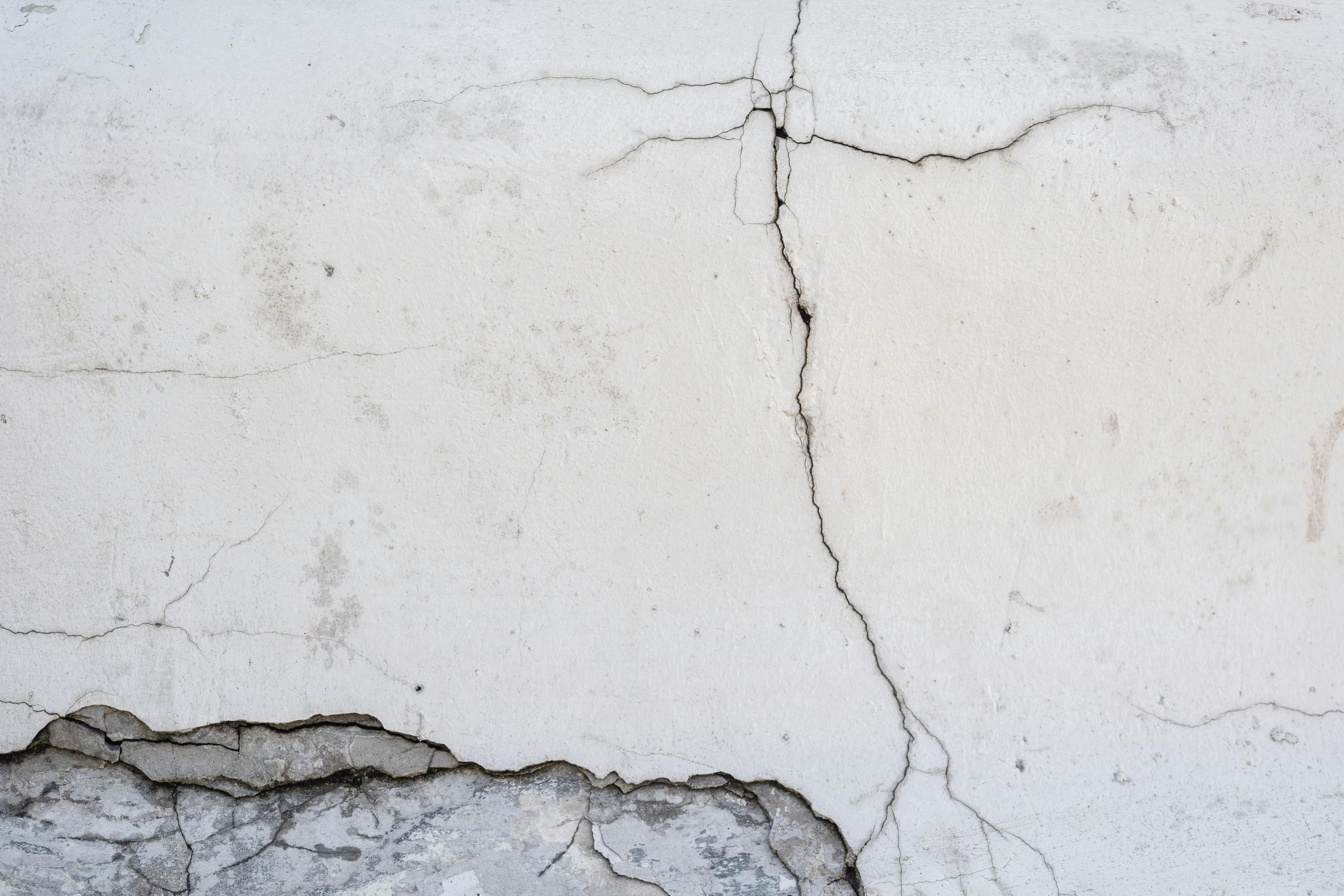
Concrete cracks are common, but the way they behave determines how serious they are and how they should be repaired. Some cracks continue to move and widen over time, while others stabilise and remain unchanged. Understanding this difference is the key to choosing the right concrete crack repair method and preventing further damage.
Active and dormant cracks impact structural performance in different ways. Active cracks can allow ongoing water ingress and lead to repeated failure if not repaired correctly. Dormant cracks may appear harmless, but can still weaken concrete if left untreated. Clear identification helps property owners protect their structures, reduce future repair costs, and maintain long-term durability.
Why Concrete Cracks Form
Concrete can crack for several reasons, and understanding the cause helps determine how the crack will behave over time. Common causes include:
- Shrinkage: Concrete naturally contracts as it cures, which can create fine cracks.
- Thermal movement: Temperature changes cause concrete to expand and contract, leading to movement-based cracking.
- Structural load: Heavy loads or shifting pressure can create stress cracks in slabs, walls, and foundations.
- Settlement: Movement in the ground beneath a structure can cause uneven support and cracking.
- Water ingress: Moisture entering the concrete can weaken it and contribute to internal pressure or corrosion.
- Reinforcement corrosion: When steel reinforcement corrodes, it expands and forces the surrounding concrete to crack.
Active Cracks vs Dormant Cracks: Key Differences
Concrete cracks fall into two main categories, and knowing which type you are dealing with guides the correct repair method.
Active Cracks
Active cracks continue to move, widen, or shift over time. This movement often comes from temperature changes, moisture variation, structural load, or ongoing settlement.
Key characteristics include:
- visible changes in width or length
- repeated cracking after previous repairs
- cracking that aligns with structural or environmental movement
- higher potential for water ingress and long-term damage
Active cracks require repair materials that can tolerate movement or reinforce the affected area.
Dormant Cracks
Dormant cracks have stabilised and show no signs of further movement. They may result from shrinkage during the curing process or from past settlement that has since stopped.
Key characteristics include:
- no change in width over time
- clean, dry edges
- minimal impact on structural movement
- lower risk of repeated failure
Dormant cracks are typically easier to repair and respond well to materials that bond firmly with static concrete.
Active vs Dormant Cracks Comparison Table
| Feature | Active Cracks | Dormant Cracks |
| Movement | Ongoing movement or change in width | No movement or width change |
| Risk Level | Higher due to continued stress and water ingress | Moderate, but still requires attention |
| Repair Approach | Requires movement-tolerant or reinforcing materials | Suitable for static crack repair materials |
| Common Causes | Temperature changes, structural load, moisture variation, and settlement | Shrinkage or past movement that has stabilised |
| Water Ingress Risk | High | Present but lower |
How to Identify Whether a Crack Is Active or Dormant
Determining whether a crack is active or dormant helps you choose the correct repair method and prevent repeat damage. A few practical checks can give you useful insight into how the crack is behaving.
- Monitor the width over time: Measure the crack at intervals. Any change in width suggests active movement.
- Look for fresh edges or dusting: Sharp, clean edges often indicate recent or ongoing movement.
- Check for lengthening or spreading: Cracks that extend or branch out may be active.
- Assess environmental factors: Temperature shifts, moisture changes, and structural load can trigger movement.
- Inspect the surrounding area: Signs of movement in nearby surfaces can confirm an active crack.
- Consult a professional: If you are unsure, a specialist can use monitoring tools or conduct an assessment to determine movement accurately.
Identifying the crack correctly ensures the repair method delivers long-term durability and prevents further damage.
Risks of Leaving Cracks Untreated
Ignoring concrete cracks can lead to damage that becomes harder and more expensive to fix. Even small cracks can develop into larger issues when left unmanaged. Key risks include:
- Water ingress: Moisture entering through cracks can weaken concrete, reduce durability, and create internal pressure.
- Concrete deterioration: Ongoing exposure to water and environmental conditions can cause surface breakdown and structural weakening.
- Reinforcement corrosion: When water reaches the steel reinforcement, corrosion can occur. As the steel expands, it forces the surrounding concrete to crack further.
- Structural instability: Active cracks can worsen under load or movement, which may compromise structural performance if not addressed.
- Increased repair costs: Early repairs are often simpler and more cost-effective. Delayed repairs may require deeper restoration or more advanced materials.
Timely crack repair helps protect the structure, maintain safety, and prevent avoidable long-term damage.
Concrete Crack Repair Options
Choosing the right repair method depends on whether the crack is active or dormant, as each type requires a different approach to ensure long-term durability. The aim is to stop water ingress, restore the integrity of the concrete, and prevent the crack from reopening.
Repairing Dormant Cracks
Dormant cracks have stopped moving and can be repaired with materials that bond firmly with static concrete.
Penecrete Mortar
Penecrete Mortar is a cementitious repair mortar used to fill and seal dormant cracks, honeycombing, and surface defects.
Key benefits include:
- strong bond with existing concrete
- high durability
- compatibility with Penetron crystalline treatments
- reliable performance in areas exposed to moisture
Penecrete Mortar helps create a dense, long-lasting repair that resists water ingress and strengthens the surrounding surface.
Repairing Active Cracks
Active cracks continue to move, so the repair method must tolerate movement or provide reinforcement to prevent further failure.
VO Patch
VO Patch is a high-strength vertical and overhead repair mortar suitable for areas under stress or minor movement.
Key benefits include:
- high compressive strength
- excellent adhesion for reinforced repairs
- suitable for vertical, overhead, and load-affected areas
- fast application for maintenance or restoration
VO Patch helps stabilise surfaces affected by movement and provides a durable repair that supports long-term structural performance.
Surface vs Deep Repairs
- Surface repair is suitable when the crack is shallow and the surrounding concrete remains strong.
- Deep repair is required when cracking exposes reinforcement, affects load-bearing areas, or allows significant water entry.
Selecting the right repair material ensures the crack is sealed effectively and the structure remains protected for years to come.
Why Product Selection Matters for Long-Term Durability
The effectiveness of any concrete crack repair depends on choosing materials that match the behaviour of the crack and the conditions of the structure. Using the wrong product can lead to repeat cracking, moisture penetration, and ongoing deterioration.
High-quality repair materials help by:
- Maintaining strong bonding: A reliable bond prevents gaps that allow water or movement to weaken the repair.
- Tolerating stress where needed: Active cracks require materials that can handle movement or reinforce the area without failing.
- Protecting against water ingress: The right product helps prevent moisture from entering and damaging the concrete.
- Reducing maintenance needs: Durable repairs extend the life of the structure and minimise future repair costs.
- Supporting overall structural performance: Correct repairs prevent small defects from turning into major issues.
Penecrete Mortar and VO Patch are built to deliver dependable results in demanding conditions.
When to Bring in a Professional
Some cracks can be assessed visually, but many issues require a trained professional to confirm whether the structure is safe and the repair method is appropriate. Bringing in an expert ensures the crack is diagnosed correctly and prevents further damage from developing.
You should seek professional support when:
- the crack widens or lengthens over time
- water is entering through the crack
- reinforcement is exposed or rust stains appear
- cracking occurs in load-bearing areas
- there is visible movement around the affected section
- multiple cracks form in the same area
- you are unsure whether the crack is active or dormant
A professional assessment provides clarity, reduces risk, and ensures the correct repair approach is used for long-term durability.
Why Choose Penetron for Concrete Repair
Penetron offers a level of reliability that comes from years of industry experience and a strong focus on long-term durability. Our concrete repair solutions are built to restore strength, protect against water ingress, and extend the life of structures exposed to harsh or demanding conditions.
We provide repair materials that bond strongly with existing concrete and deliver consistent performance in both active and dormant crack situations. Products like Penecrete Mortar and VO Patch form part of a system designed to strengthen damaged areas, resist moisture, and improve the overall integrity of the structure. These materials support repairs across many environments, including basements, retaining walls, car parks, industrial floors, and infrastructure.
Penetron also offers technical guidance to help property owners, builders, and engineers choose the correct repair method. This support ensures the crack is assessed accurately and the repair strategy suits the conditions of the project. By combining proven materials with expert advice, Penetron helps reduce future maintenance needs and protect structures from avoidable long-term damage.
Contact Penetron Australia to discuss your project and receive expert advice backed by years of industry experience.